
From fragmented HR tasks to oneintelligent operations core
98%
Reduction in manual HR document preparation time through API-based generation of forms, letters, and ID cards
3x
Faster monthly payroll processing by auto-calculating deductions and generating payslip records in batch
99%
Data consistency in leave-to-attendance reconciliation via trigger-based synchronization and approval-state automation
Operational overhead was slowing workforce decisions
At Fashion Channel, HR operations were spread across disconnected tasks: employee data updates, attendance checks, leave approvals, financial request reviews, and document preparation happened in separate flows with high manual effort. This increased approval latency, introduced inconsistencies between leave and attendance records, and made payroll preparation harder to validate month-over-month.
A role-based HR automation platform built for scale
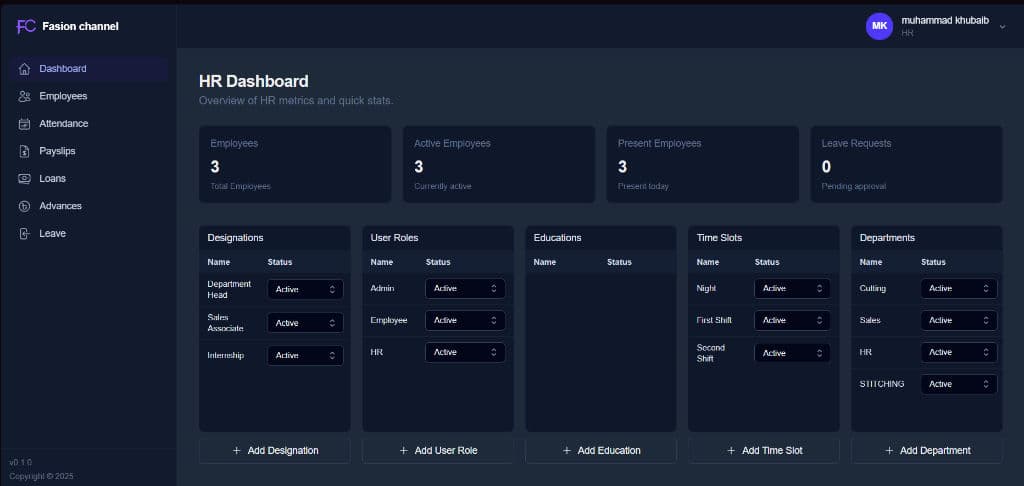
Neura Agency implemented a Next.js + Supabase architecture for Fashion Channel with dedicated dashboards for HR, Admin, and Employee personas. Core modules were unified into one data model: employee lifecycle management, attendance history, leave workflows, loans/advances, and payroll records. The platform includes typed query layers, paginated operational views, and approval actions with reviewer metadata for better auditability.
Core Capabilities
Role-Based Workspaces
Separate HR, Admin, and Employee dashboards enforce operational boundaries while keeping each role focused on the tasks and data they need. Route and navigation behavior adapt to the authenticated role for tighter process control.
Employee Lifecycle + Digital Document Center
The system manages end-to-end employee records, department and shift mapping, and secure file workflows for profile photos, CNIC images, and supporting documents. HR can generate employee forms, ID cards, offer letters, and confirmation letters directly from API-powered templates.
Leave Management
Request submission, approval workflows, and realtime counters.
Attendance Intelligence with Leave Sync
Attendance views combine employee-level timelines, date filters, and check-in/check-out visibility with shift context. Approved leave is synchronized into attendance through PostgreSQL trigger logic, reducing reconciliation drift between modules.
Financial Request Orchestration
Loan, advance, and leave requests follow structured approval pipelines with status transitions, reviewer tracking, and editable pending drafts. Deduction start windows and repayment durations are captured so payroll impacts are predictable.
Automated Payroll + Promotion Engine
Monthly payslip generation calculates gross, deductions, and net pay using active loan/advance schedules, while internship auto-promotion rules update designations on schedule. This combines policy automation with payroll readiness in one platform.
Architecture & Technology
Frontend
- Next.js 15
- React 19
- TypeScript
- Tailwind CSS 4
- Headless UI
- Heroicons
Backend
- Next.js Route Handlers
- Node.js runtime
- Supabase PostgreSQL
- Supabase JavaScript SDK
- pdf-lib
Infrastructure
- Supabase
- AWS S3-compatible object storage
- GitHub Actions (scheduled automation)
- PostgreSQL pg_cron
External APIs
- Supabase API
- AWS S3 API